
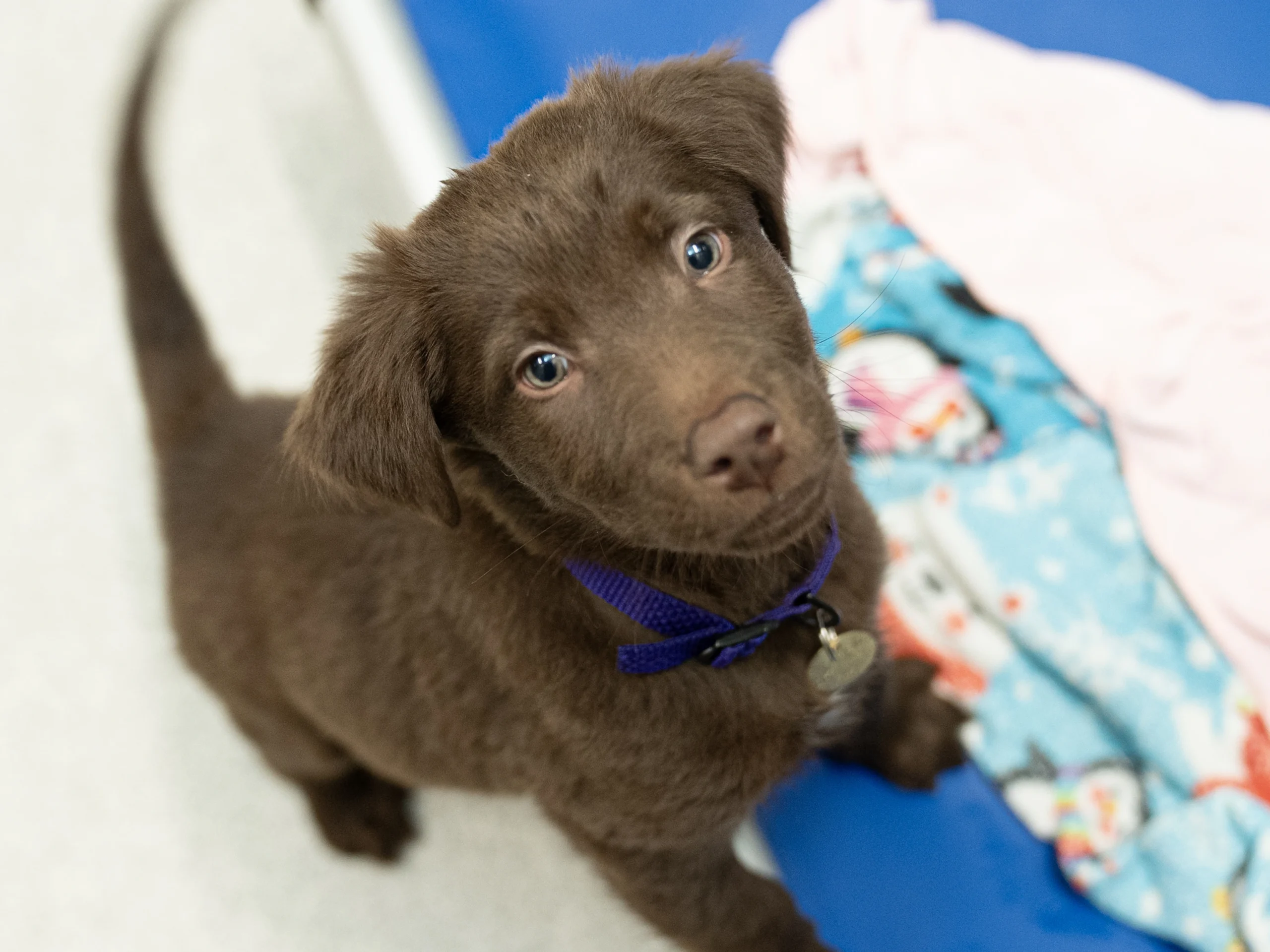
Although feeding time is important, it’s also vital to include petting, talking, and playing, in order to help your puppy build good “people-skills.” Well-socialized mothers are more likely to have well-socialized puppies. Puppies “feed” off their mothers’ calm or fearful attitude toward people. Puppies are usually weaned at six or seven weeks, but are still learning important skills as their mother gradually leaves them more and more. Ideally, puppies should stay with their littermates (or other role model dogs) for at least 12 weeks.
Puppies separated from their littermates too early often don’t develop appropriate “social skills,” such as learning how to send and receive signals, what an “inhibited bite” means, how far to go in play wrestling, and so forth. Play is important to help puppies increase their physical coordination, social skills, and learning limits. By interacting with their mother and littermates and attending puppy preschool classes, puppies learn “how to be a dog.” Skills not acquired during the first eight weeks may be lost forever. While these stages are important and fairly consistent, a dog’s mind remains receptive to new experiences and lessons well beyond puppyhood. Most dogs are still puppies, in mind and body, through the first two years.
The following chart provides general guidelines for stages of development.
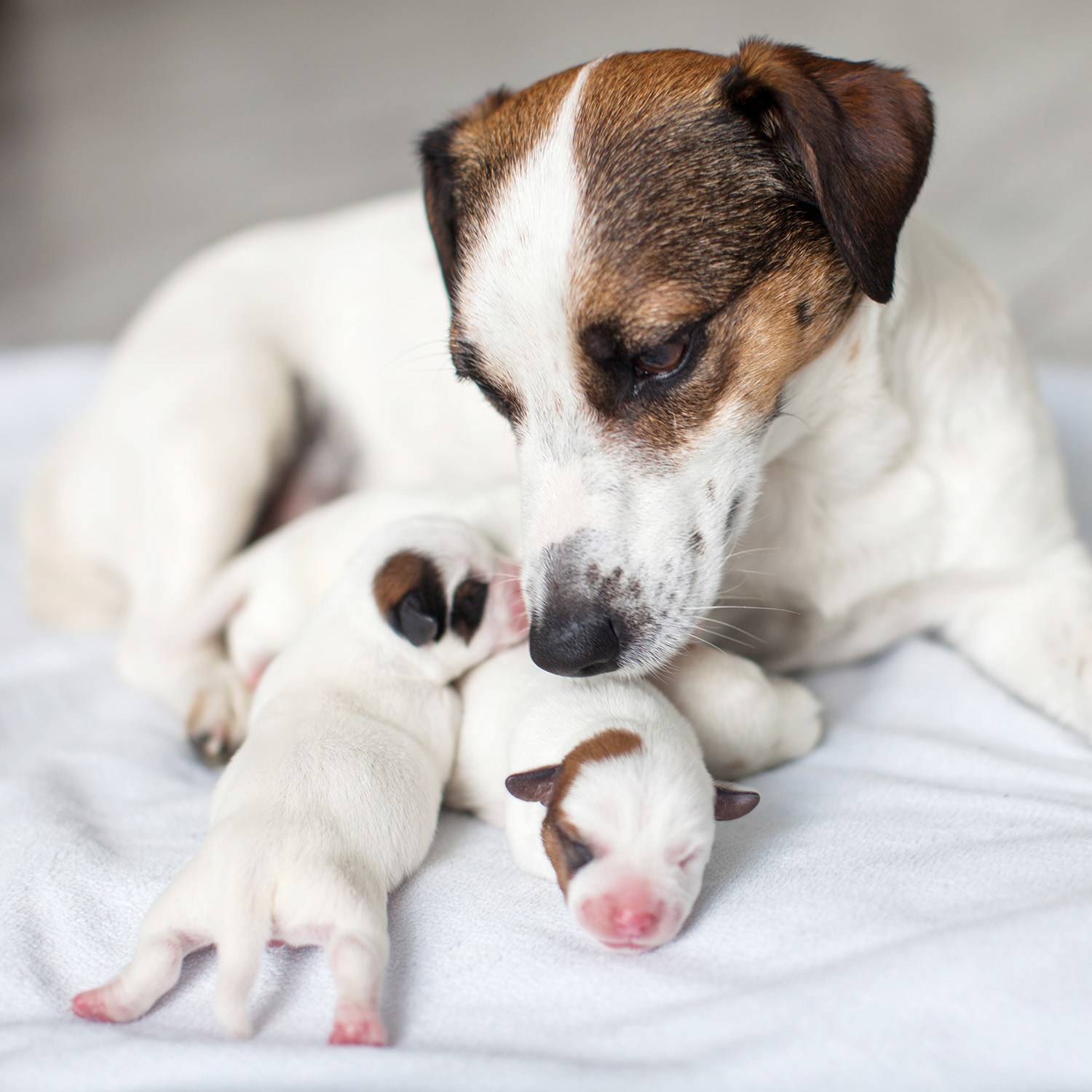
Puppies 0-2 weeks old
Newborn puppies spend most of their time eating and sleeping. They rely on their mother for food, warmth, and cleaning.
Touch and taste are present at birth.

Puppies 2-4 weeks old
Between 2 and 4 weeks old, puppies are most influenced by their mother and littermates, learning how to be a dog.
Eyes are open, teeth erupt, hear and sense of smell are developing. At this point they are also beginning to stand, walk a little, wag their tail, and bark.
Puppies are becoming aware of their surroundings, companions (dogs and people), and relationships.
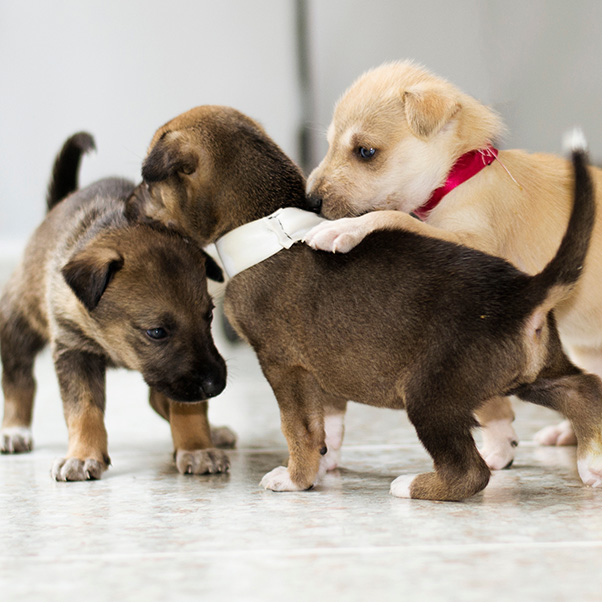
Puppies 5-12 weeks old
By the 5th week, sight is well developed.
At this point, they are learning how to play, developing social skills, inhibited bite, and physical coordination.
Curiosity, exploration, and positive “people” experiences dominate this time while the puppies are refining their physical skills and coordination. This is a great time to begin housetraining.
They have full use of their sense and start to experience fear – they may be alarmed by normal objects and experiences, especially without positive reinforcement and training.
By nine to 12 weeks they’re refining reactions, social skills (appropriate interactions) with littermates, and are exploring the environment, spaces, and objects.
They are beginning to focus on people. This is a good time to begin training.

Puppies 3-6 months
Puppies are still most influenced by littermates, but playmates may include other species.
Beginning to see and develop social relationships.
Teething and associated chewing are prominent at this stage.

Puppies 6-18 months
Puppies begin to explore their environment through their second chew phase.
With a heightened exploration of assertion, puppies will test limits, challenge human and dog relationships, and explore boundaries in this stage.
If the puppy is not spayed or neutered, they will begin exhibit sexual behavior.